Exploring Glenturret’s evolving identity, the influence of Lalique since its takeover in 2019, and the balance between traditional craftsmanship and automation in modern whisky making.
Glenturret was the first distillery we visited on our whisky tasting tour — a quest to find six exceptional single malts for our upcoming blind tasting collection.
Located in Crieff, Glenturret traces distilling on the site back to 1763 and lays claim to being Scotland’s oldest working distillery. My last visit was in 2019, when I was still building the idea for Azu Spirits. Coincidentally, that was also the year the distillery was acquired by a group led by Lalique owner Silvio Denz and Hansjörg Wyss.
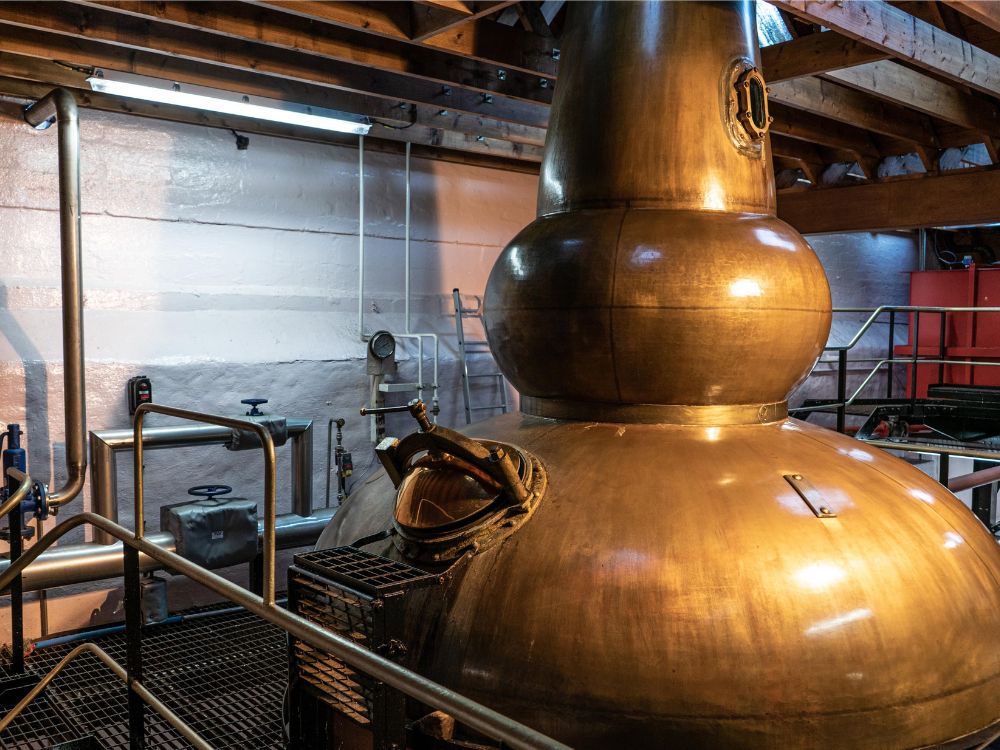
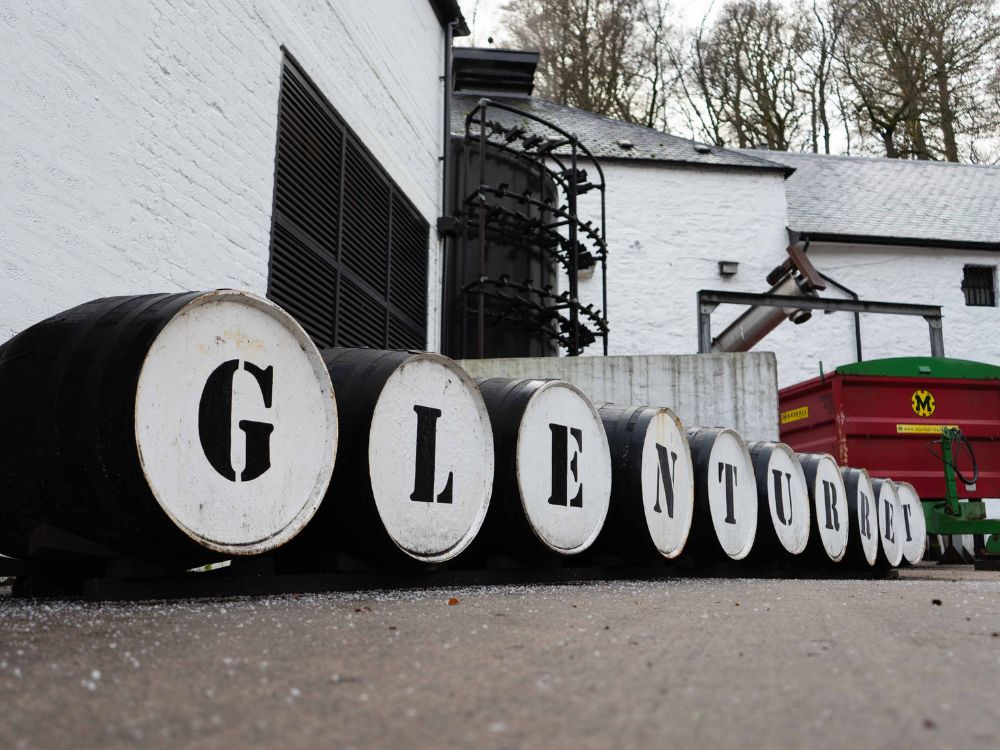
Returning several years later, I was fascinated to see what had changed. Lalique’s influence is immediately visible. But as we moved through the distillery, I found myself thinking less about the obvious changes and more about something happening throughout Scotch whisky: as distilleries modernise, automate and gain increasingly precise control over production, how do they preserve the individuality of the spirit?
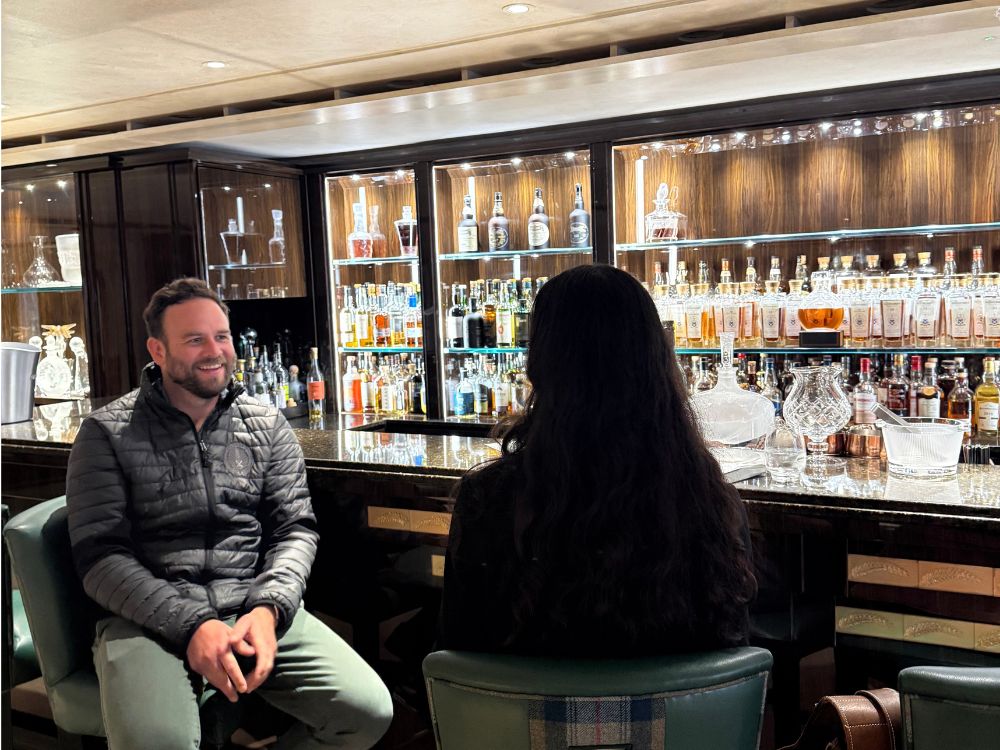
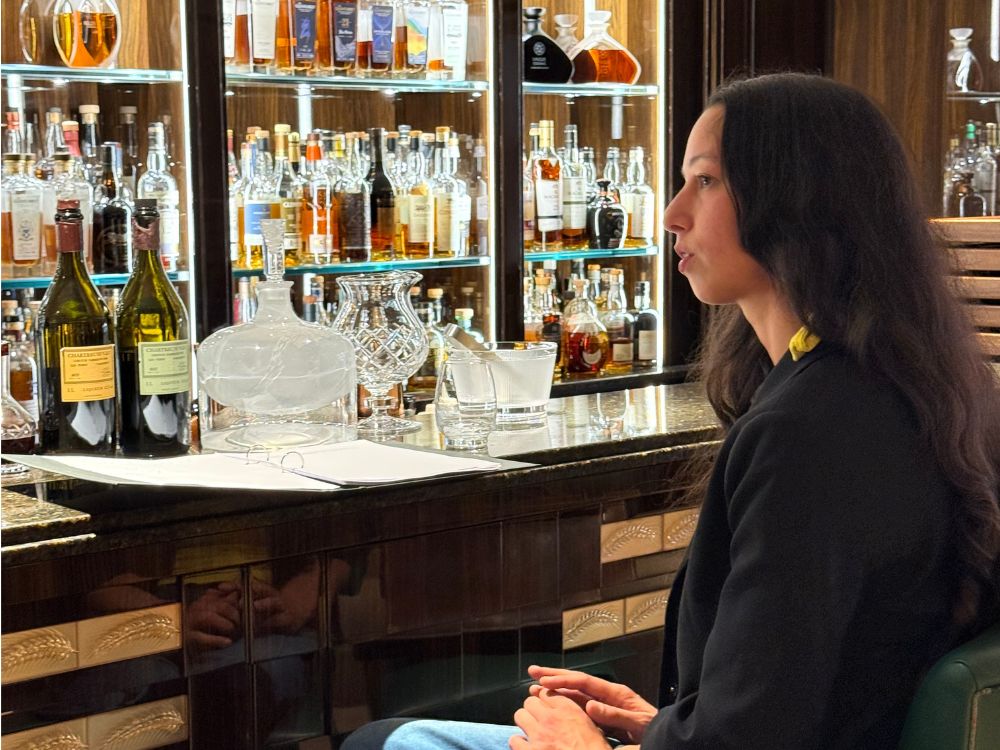
Our visit began with a tour and tasting before we sat down with Ruaridh in Glenturret’s striking Michelin-starred restaurant and bar.
A whisky shaped by its history
One question I had for Ruaridh was when Glenturret’s signature style actually emerged — and whether we have any real idea what its whisky would have tasted like 200 or 250 years ago.
Distilling then would have been a very different world, much closer to small-scale farm and illicit production than the carefully controlled single malt whisky we know today. The idea that a distillery has maintained the same immutable “house style” for centuries is therefore difficult to imagine with how dramatically whisky production itself has changed.
Ruaridh pointed to James Fairlie, who bought Glenturret in 1957, as an important figure in laying the foundations for its modern spirit style.
It is an interesting reminder that the character we associate with an old distillery isn't simply inherited. It is continually shaped by the people who work there, the equipment they use, the decisions they make and the whisky they choose to mature and bottle.
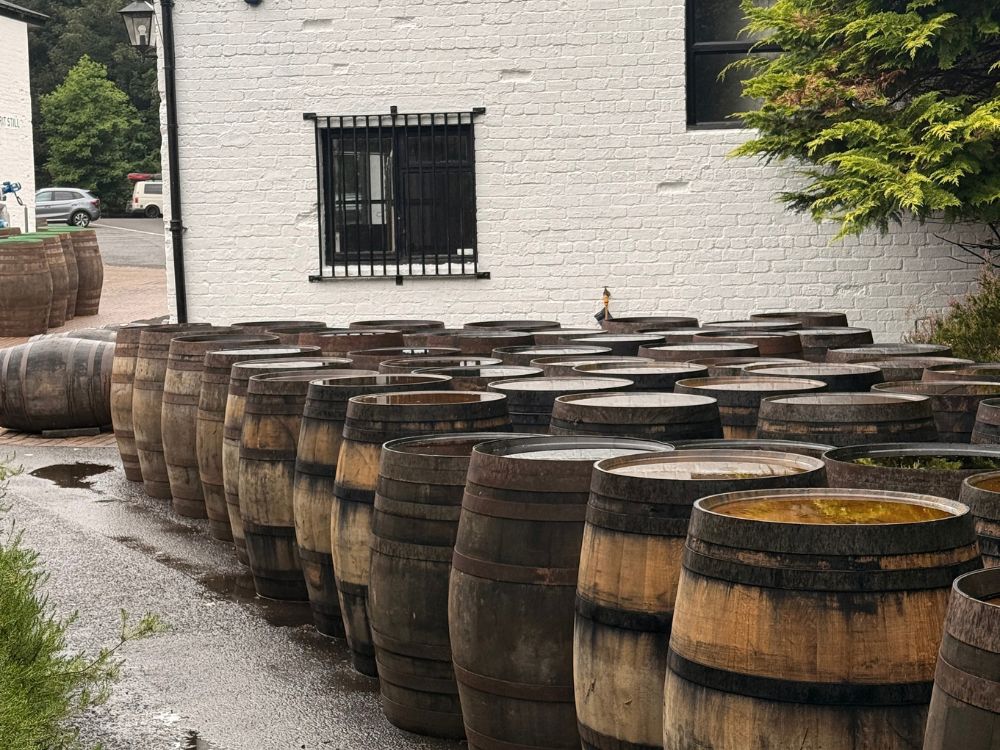
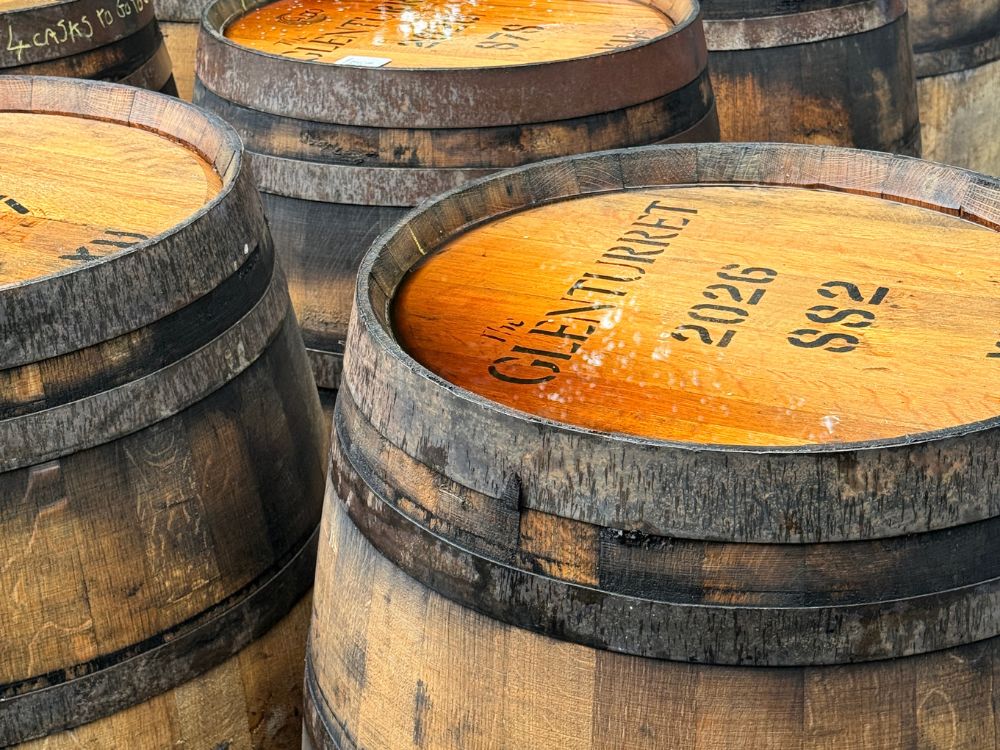
Today, sherry casks have become closely associated with Glenturret. Its relatively pure, elegant distillate and fruity esters provide a base capable of carrying rich maturation without being overwhelmed by it. Since Lalique took over in 2019, another chapter of that identity has begun.
The Lalique era
The transformation is difficult to miss. The visitor centre, shop and bar have been renovated, the bottles redesigned, and the positioning of the whisky has shifted decisively towards premium single malt.
Previously, Glenturret was closely associated with The Famous Grouse. It was an important malt within the blend and the distillery itself was home to the Famous Grouse Experience. Today the emphasis is very different.
The focus is Glenturret itself. There are older and more selective casks, experimental releases and collaborations, alongside greater exploration of different maturation styles. The 21-year-old Deux Terrains was mentioned several times during our visit, and Lalique's connections to vineyards have also opened interesting possibilities around wine-cask maturation.
There have been changes behind the scenes too. Sustainability has influenced production decisions, including the move away from producing peated spirit, while equipment such as the mash tun has been updated.
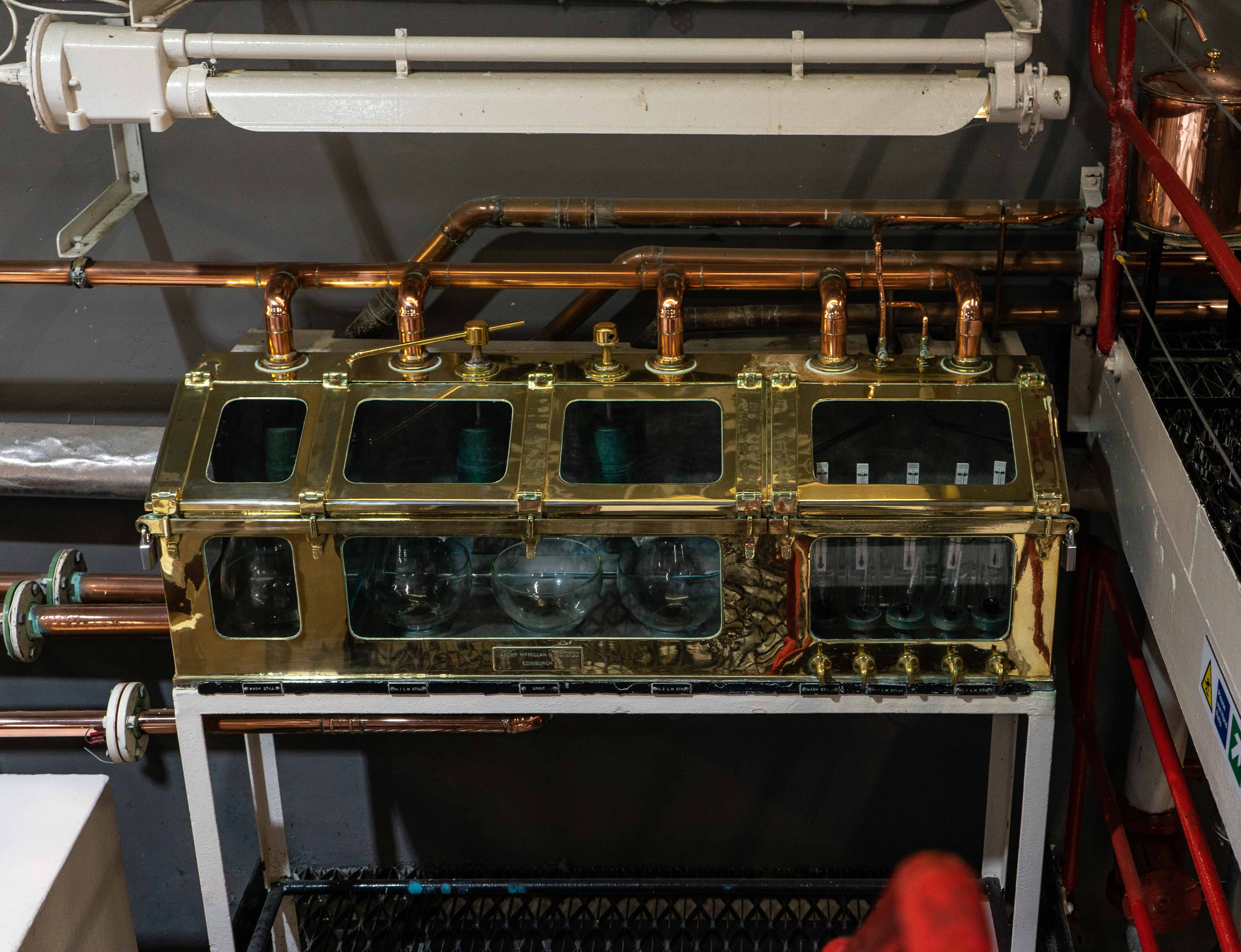
Yet perhaps the more interesting aspect of this transformation is what hasn't changed. Whisky remains an unusually difficult product to modernise completely. You can automate processes, measure fermentation with extraordinary precision and improve consistency — but many of the things responsible for character are still remarkably physical. Copper, yeast, wood, time...
Where does character actually come from?
This was the question I kept coming back to as we walked around Glenturret. I kept thinking how different distilleries sit at very different points on the spectrum between tradition and modern control.
One of the things I love about Edradour is its tiny scale: small stills, worm tubs and beautifully aged whiskies. Walking around it makes you wonder whether you are experiencing something closer to the whisky production of a century ago.
Octomore almost represents the opposite idea. It challenges many assumptions about what whisky ought to be. Extreme peat, highly considered cask regimes and a willingness to experiment show how science, precision and a very different philosophy of production can create something equally distinctive.
Our blind tasting journey has reinforced this again and again: there is rarely a simple relationship between tradition and quality. Exceptional whisky can come from very different approaches. Ultimately, so much depends on subjective taste.
But there are certain parts of the process that remain fundamental. Single malt Scotch must be made from malted barley, water and yeast, distilled at a single distillery in pot stills and matured in oak in Scotland for at least three years. Within those seemingly simple constraints lies an extraordinary number of variables, and that is where individuality begins.
Copper, fermentation and the details that matter
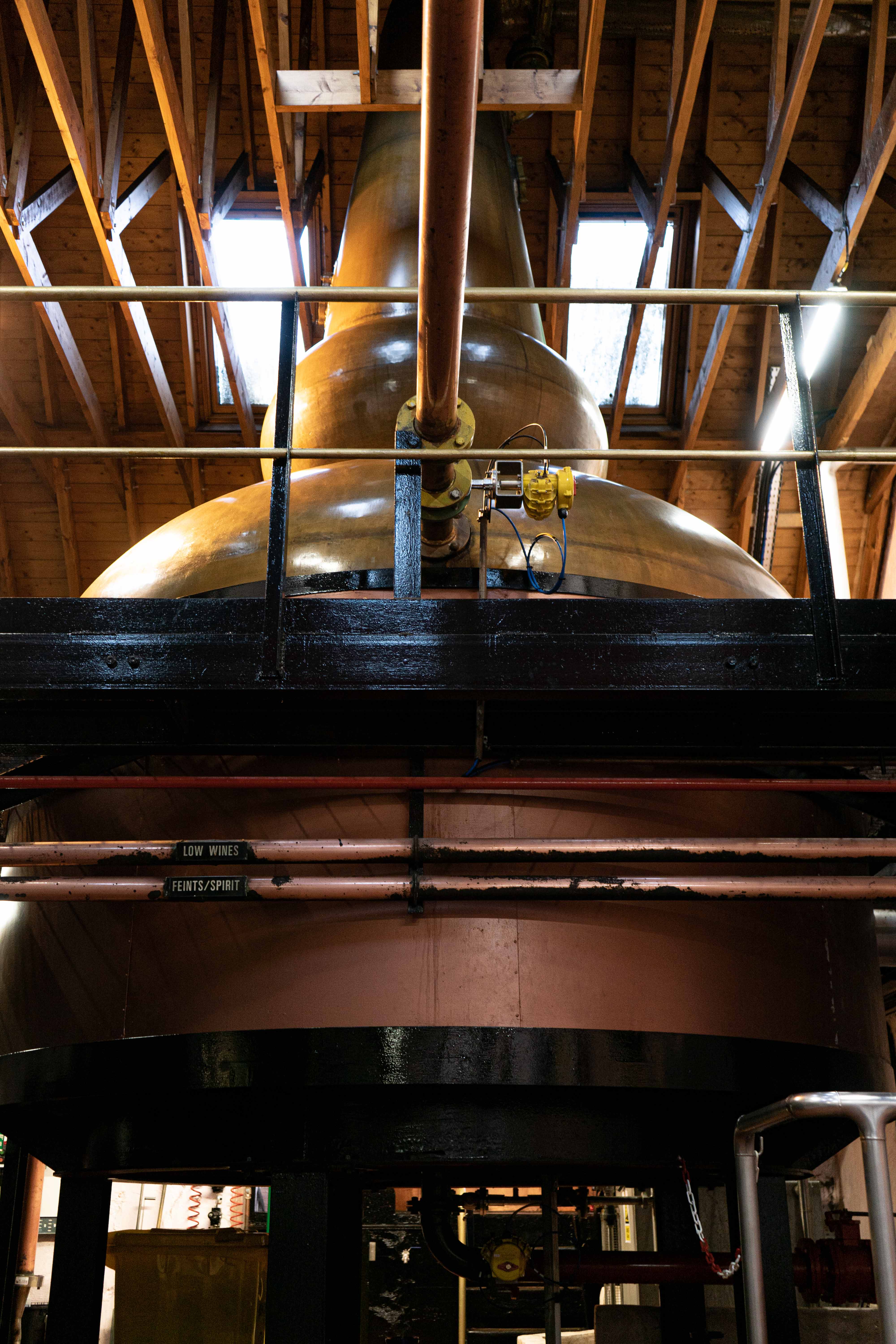
During distillation, the size and shape of a still will influence reflux and copper contact, changing which compounds make it into the final spirit. Condensers matter too. Traditional worm tubs tend to provide less copper contact and can help create heavier, meatier spirits, while shell-and-tube condensers generally encourage greater copper interaction and a lighter spirit.
You can see the principle at the extremes. Ardbeg’s shorter, wider stills contribute to the weight and oily character associated with its spirit, while Glenmorangie’s famously tall stills encourage considerably more reflux, helping create its lighter, more delicate style.
Glenturret is another expression of those choices: an elegant, relatively light and floral new make that can sit comfortably underneath richer sherry maturation.
Fermentation raises an even more interesting question.
Traditionally, washbacks were wooden — often Oregon pine — while many modern distilleries use stainless steel. The practical advantages of steel are obvious: it is durable, consistent and easier to clean. But does something disappear when you remove the wood?
Much of the flavour development associated with fermentation can occur in either vessel. Yet research into the microbial communities living within wooden washbacks raises a fascinating possibility: that the microorganisms inhabiting an old piece of equipment may themselves become part of a distillery's character.
Glenturret also experiments with variables such as yeast and barley strains to understand how seemingly small changes upstream might eventually appear in the glass. Perhaps this is where the relationship between automation and craftsmanship becomes most interesting.
Modern technology allows distillers to understand and control their process more precisely than ever before. But greater control does not necessarily mean greater uniformity. Used differently, it can allow distillers to understand which variables matter — and then deliberately preserve, or even exaggerate, them.
Glenturret was a fascinating place to explore how distilleries evolve whilst firmly rooted in their heritage. It is one of Scotland's oldest distilleries, but the whisky being made there today is the product of centuries of change — different owners, different people, evolving equipment, changing casks and a continually developing understanding of how flavour is created.